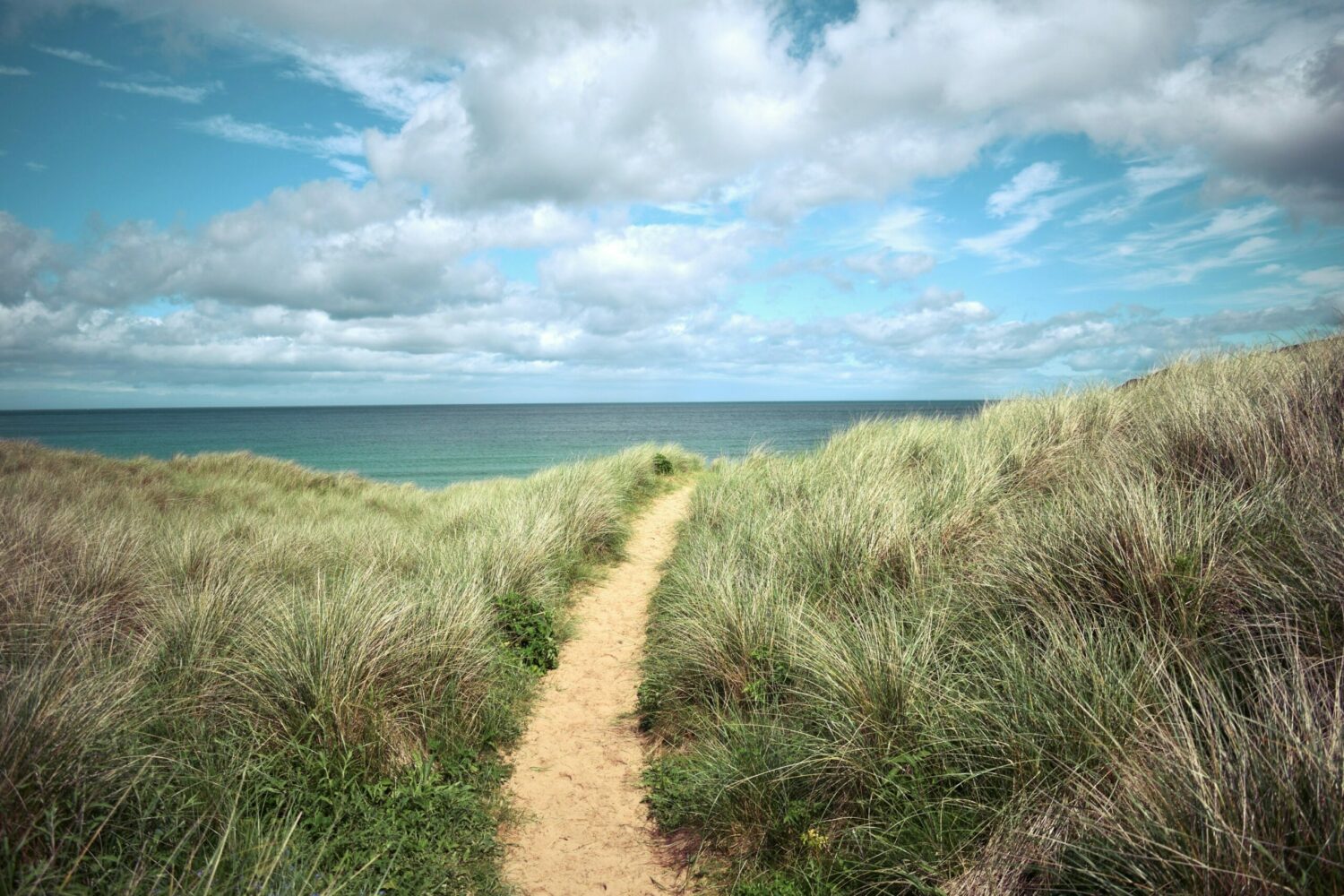
The King’s Path
The King’s Path: How England Finally Opened Its Entire Coastline
On a windy March morning in 2026, King Charles III stood beneath the famous white cliffs of Seven Sisters in Sussex to inaugurate one of the most ambitious public-access projects in modern British history: the King Charles III England Coast Path. Stretching for almost 2,700 miles (4,300 km), it is now the longest managed coastal walking route in the world, allowing walkers to follow England’s coastline almost continuously from the Scottish border to the Welsh frontier. For many walkers, the new trail represents far more than a collection of footpaths. It is the culmination of a dream that took more than sixteen years to become reality.
A Long History of Limited Access
Unlike Scotland, where « right to roam » legislation gives the public extensive access to the countryside, England has traditionally had more restrictive access laws. Large sections of the coastline were inaccessible because they crossed private land, military areas, industrial sites, or simply lacked public rights of way. As a result, walkers could often find themselves forced inland, far from the sea they had come to enjoy.
Campaigners had been arguing for greater coastal access since the end of the Second World War. Organisations such as the Ramblers spent decades lobbying governments to create a continuous coastal route around England. Their efforts finally bore fruit with the passing of the Marine and Coastal Access Act 2009, legislation introduced during the premiership of Gordon Brown. The law instructed Natural England to establish a national coastal trail and improve public access to the shoreline.
Building a Path Around a Nation
England’s coastline is incredibly varied. It includes towering cliffs in Cornwall, vast estuaries in East Anglia, industrial ports, military zones, salt marshes, sandy beaches and densely populated seaside towns. Engineers, planners and environmental specialists had to negotiate with thousands of landowners while ensuring that sensitive wildlife habitats remained protected.
In many places, existing routes such as the famous Southwest Coast Path were incorporated into the new trail. Elsewhere, entirely new sections had to be created. More than 1,000 miles of new routes were built, including bridges, boardwalks, steps and improved surfaces designed to make the coast accessible to a wider range of visitors.
One particularly innovative feature is the so-called « roll-back » system. As coastal erosion causes cliffs to collapse or shorelines to retreat, sections of the path can be moved inland without requiring lengthy legal procedures. This allows the trail to adapt to climate change and the constantly shifting coastline.
More Than a Walking Trail
The project is not simply about recreation. Supporters argue that it will generate significant economic benefits for coastal communities by encouraging tourism, supporting local businesses and attracting visitors to less well-known parts of the country. Government estimates suggest that the route will bring new opportunities to many towns and villages that have struggled economically in recent decades.
The path also grants access to large areas of coastal land between the trail and the sea, including beaches, dunes and cliff-tops that were previously inaccessible to the public. Environmental groups have welcomed the project as a way of helping people reconnect with nature while increasing appreciation of England’s coastal ecosystems.
A Royal Connection
Although the project began long before Charles became king, the route was renamed the King Charles III England Coast Path in honour of the monarch’s long-standing interest in environmental issues and conservation. During the inauguration ceremony in March 2026, the King walked part of the route near Seven Sisters, symbolically opening a trail that had taken almost two decades and seven prime ministers to create.
A New Way to Discover England
Today, the path links dramatic landscapes, historic fishing villages, ancient castles, bustling resorts and nature reserves into a single continuous journey. Walkers can explore the rugged cliffs of Northumberland, the chalk coast of Sussex, the beaches of Norfolk and the wild headlands of Cornwall without ever losing sight of the sea for long.
For the first time in history, England’s entire coastline has effectively become one giant national trail. What began as a political idea in 2009 has become a landmark achievement in public access, environmental management and outdoor recreation. Whether anyone actually walks all 2,700 miles is another question—but knowing that it is possible may be achievement enough.
Watch that video to have a better idea :