Fish & Chips
Fish and chips is one of the most famous and beloved dishes in the United Kingdom. For many people, it’s more than just a meal – it’s a national symbol, a comfort food, and a tradition that brings back childhood memories of seaside holidays and Friday nights.
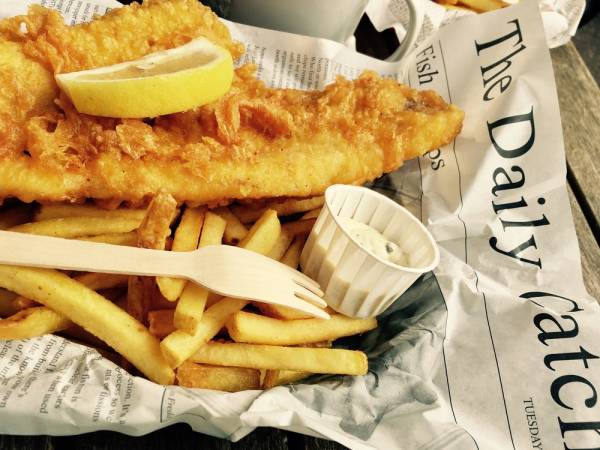
The dish itself is simple but delicious: pieces of white fish, usually cod or haddock, are dipped in batter and deep-fried until golden and crispy. The fish is served with thick-cut chips (known as “fries” in other countries), often sprinkled with salt and vinegar. Some people like to add mushy peas, tartar sauce, or curry sauce on the side.
Fish and chips became popular in the 19th century, during the Industrial Revolution. As people moved to towns and cities for work, they needed cheap and filling food. Thanks to the development of railways, fresh fish could be transported from coastal areas to the cities, and potatoes were easy to grow locally. Soon, fish and chip shops, or “chippies,” appeared all over the country.
During both World Wars, fish and chips were one of the few foods that were never rationed. The government considered them essential for morale, as they provided comfort and a taste of normal life in difficult times. Even today, fish and chips remain a part of British identity, connecting the past and present through taste and tradition.
Nowadays, you can find fish and chips everywhere – from small local shops wrapped in paper to trendy restaurants offering modern versions of the classic dish. Whether eaten by the sea, in a pub, or at home on a Friday night, fish and chips continue to represent the warm, simple pleasures of British life.
Interesting! Servings were often wrapped in old newspaper to keep costs down. This carried on until the 1980s when it became unsafe for food to touch newspaper ink without grease-proof paper in between. Lucky you, here’s a comprehensive look in to the creation of Britain’s most beloved meal! Enjoy!